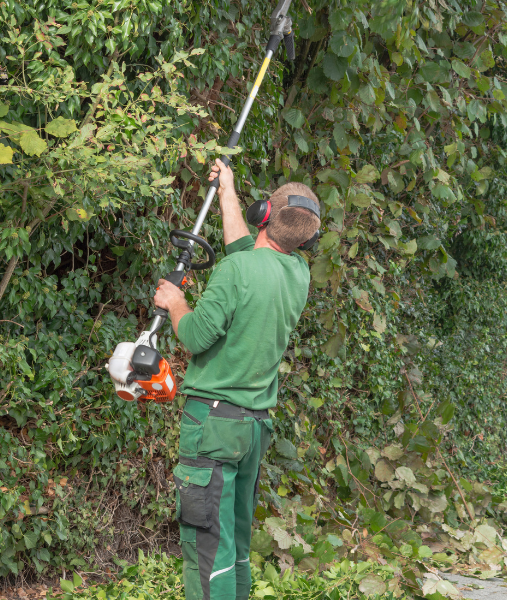
Improving the Shape, Structure and Appearance of Your Hedge
A hedge can provide privacy, shelter and a natural boundary, but uncontrolled growth may leave the garden looking untidy. Long shoots, uneven sections and branches spreading across paths or lawns can make the boundary appear poorly defined and reduce the usable space around it.
Professional hedge trimming restores a clearer shape while taking account of the plant’s species, condition and growth pattern. For property owners in Canterbury, Kent, well-planned trimming can create a more orderly garden boundary without compromising the hedge’s long-term health.
Creating a Consistent Height and Shape
Hedges rarely grow at a perfectly even rate. Sections receiving more light may develop quickly, while shaded or weaker areas remain lower. Without regular attention, the top and sides can become irregular.
Trimming establishes clear lines across the length of the hedge. This may involve:
- Levelling an uneven top
- Straightening protruding side growth
- Removing isolated shoots
- Reducing overextended sections
- Restoring a balanced profile
- Blending previously cut areas
- Defining corners and changes in direction
A consistent shape helps the hedge function as a deliberate garden feature rather than a collection of uncontrolled shrubs.
Defining the Property Boundary
An overgrown hedge can obscure the original boundary line and spread into neighbouring garden features. Branches may extend across paths, driveways, lawns or planting beds, making the available space feel smaller.
Careful side trimming can bring the hedge back to an appropriate width and create a clearer division between different areas. This is particularly useful where access is restricted or the hedge grows alongside regularly used routes.
The required reduction should be based on the hedge species and its ability to produce new growth. Cutting too far into old, bare wood can leave some varieties with lasting gaps.
Making Paths and Entrances Easier to Use
Hedges often grow beside paths, gateways and entrances. As side growth develops, it can narrow these routes, brush against pedestrians and obstruct visibility.
Trimming can improve access by removing low or projecting branches while retaining the density of the wider hedge. Particular attention may be given to:
- Garden gates
- Driveway entrances
- Side passages
- Steps
- Bin storage areas
- Parking spaces
- Routes to sheds or other garden structures
Restoring clearance makes the boundary look sharper and allows these areas to function more comfortably.
Encouraging Denser Growth
Appropriate trimming can encourage branching and help maintain a fuller hedge. When the ends of suitable shoots are shortened, growth may develop from points further back, creating a denser structure over time.
The response depends on the plant species, age and condition. Some hedges tolerate close trimming, while others require a lighter approach. Professional assessment helps determine how much material can be removed without causing unnecessary stress.
Where a hedge has become thin or patchy, repeated careful maintenance may be more effective than one severe cut.
Why the Hedge Profile Matters
A hedge should generally be shaped so that light can reach its lower sections. If the top becomes much wider than the base, it may shade the growth beneath and contribute to sparse or bare areas.
A balanced profile often has a slightly narrower top and a broader base. This can:
- Improve light distribution
- Support lower growth
- Reduce excessive weight at the top
- Create a more stable appearance
- Make future maintenance easier
The ideal form varies between hedge types, so the natural growth habit should guide the final shape.
Improving the Appearance of the Whole Garden
A hedge frequently forms the visual backdrop to lawns, patios and planting areas. When its outline is uneven, the wider garden may look less organised even if other features are well maintained.
A cleanly trimmed boundary can provide a structured background that makes flower beds, trees and outdoor seating areas appear more defined. It can also create a stronger visual connection between separate parts of the garden.
The objective does not always have to be a formal, sharply cut hedge. Softer shaping may suit an informal garden while still controlling unwanted growth and maintaining a clear boundary.
When a Hedge Needs More Than a Light Trim
Routine trimming deals mainly with recent growth. A hedge that has been left unmanaged for several seasons may require reduction or renovation rather than a straightforward surface cut.
Signs that broader work may be needed include:
- Excessive height or width
- Thick branches projecting from the main outline
- Large gaps or bare sections
- Heavy growth leaning over access routes
- Competing shrubs growing through the hedge
- Dead or damaged branches
- An uneven structure caused by previous cutting
A staged approach may sometimes be recommended to avoid removing too much living material at once.
Why Correct Equipment and Technique Matter
Creating a straight and consistent finish requires more than cutting every visible shoot to the same point. The operator must maintain the correct line, avoid tearing branches and adjust the technique to suit different stem thicknesses.
Professional equipment also makes it possible to reach taller and wider hedges safely. This reduces the likelihood of uneven sections caused by overstretching or working from an unstable position.
Cut material should be removed from the top and base of the hedge after trimming. Leaving debris trapped within the growth can restrict light and make it harder to inspect the hedge’s condition.
Planning Ongoing Hedge Maintenance
A neat boundary is easier to maintain when trimming takes place at suitable intervals. The appropriate schedule depends on the species, growth rate, required shape and surrounding space.
Fast-growing formal hedges may need more frequent attention, while slower-growing or informal boundaries can often be managed with lighter periodic work. Regular trimming helps prevent new shoots from becoming thick branches and reduces the need for major corrective cutting later.
A professional maintenance plan can be adapted to the hedge rather than applying the same schedule to every property.
The Value of Professional Hedge Trimming
A tree surgery professional can assess the hedge before deciding where and how heavily to cut. This is important when the boundary contains different species, uneven growth or older sections that may not recover readily from severe trimming.
Professional work combines appearance with plant care. The aim is to create a defined boundary while retaining enough healthy growth for the hedge to continue performing as intended.
Conclusion
Hedge trimming can create a neater garden boundary by restoring an even height, controlling spreading growth and defining the edge of paths, lawns and entrances. Correct shaping can also encourage denser growth and help lower sections receive sufficient light.
The best results come from matching the cutting method to the hedge’s species and condition. If your boundary hedge in Canterbury, Kent, has become uneven or overgrown, Canterbury Tree Surgeons can assess it and recommend a suitable trimming approach. Contact the team to arrange a professional visit.
Call us on: 01227 203994
Click here to find out more about Canterbury Tree Surgeons
Click here to complete our contact form and see how we can help with your trees needs.