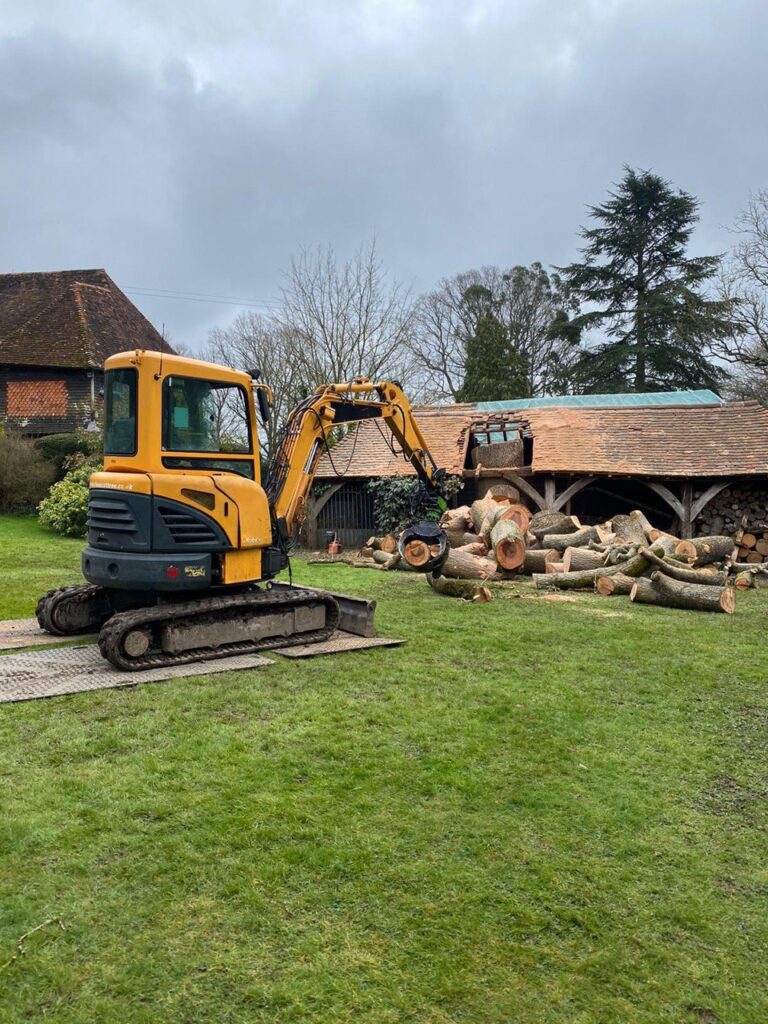
Laying new turf over a garden can quickly improve its appearance, but the ground must be properly prepared before work begins. An old tree stump can obstruct excavation, prevent accurate levelling and leave unsuitable conditions beneath the proposed lawn.
Removing or grinding the stump creates a clearer working area and allows the surrounding soil to be assessed. For gardens in Canterbury, Kent, professional stump removal can therefore be an important first stage when preparing land for new turf.
Why Stump Removal Matters Before Laying New Turf
A stump is more than the visible section of timber above ground. Its base and major roots may extend through the area intended for the lawn. Covering these remains with soil does not remove the underlying obstruction and can create problems as the timber gradually decays.
A Stump Prevents Even Ground Preparation
Successful turfing requires a reasonably level and well-prepared soil surface. A protruding stump makes it difficult to cultivate the ground, remove debris and establish consistent levels.
Simply spreading topsoil over the stump can create a raised section with insufficient soil depth. Grass growing above this area may struggle to establish because its roots cannot develop normally around the remaining timber.
Decaying Wood Can Cause the Lawn to Sink
Tree stumps and roots gradually break down after a tree has been felled. As the timber loses volume, the soil above it can settle into the resulting spaces.
If turf has already been laid, this settlement may create dips and uneven areas across the lawn. These depressions can collect water, interrupt mowing and produce an inconsistent appearance. Removing the main stump before turfing reduces the quantity of decaying material beneath the surface.
Stump Grinding Creates a More Workable Area
Stump grinding uses specialist machinery to reduce the stump to below ground level. This removes the immediate obstruction without requiring the entire surrounding area to be excavated.
The required grinding depth depends on the stump, ground conditions and future use of the site. Where new turf is planned, sufficient space must be created for suitable soil preparation rather than leaving only a thin covering over the remaining wood.
Surface Roots May Also Need Attention
Removing the central stump does not automatically eliminate every root. Large surface roots can continue to obstruct levelling or create raised lines beneath the new lawn.
A professional assessment can identify which roots affect the turfing area and determine how they should be managed. Unnecessary excavation should be avoided, particularly where nearby plants, boundaries or garden features could be disturbed.
Old Stumps Can Encourage Unwanted Regrowth
Some tree species can produce new shoots from the stump or remaining roots after felling. These shoots may emerge through or around newly laid turf, disrupting the lawn and creating repeated maintenance.
Grinding the stump can reduce the likelihood of regrowth, although the appropriate approach depends on the species and condition of the tree. Identifying this before turfing helps prevent new growth from interfering with the finished surface.
Removal Makes Soil Improvement Easier
Areas surrounding old trees may contain compacted soil, woody debris and an uneven distribution of roots. Once the stump has been dealt with, the ground can be inspected and prepared more thoroughly.
Preparation may involve:
- Removing loose wood and remaining debris
- Addressing significant surface roots
- Filling the excavated area with appropriate material
- Consolidating the ground to reduce future settlement
- Establishing suitable levels and drainage
- Preparing an adequate layer of soil for turf rooting
Careful reinstatement is essential because loosely filled ground can settle after the lawn has been completed.
Timing the Work Correctly
Stump removal should take place before final soil preparation and turf installation. This prevents machinery and excavation work from disturbing a newly prepared surface.
The ground may also require further levelling and consolidation after grinding. Coordinating these stages allows the turfing work to begin on a stable, clean and properly prepared base.
Why Covering the Stump Is Not a Reliable Solution
Leaving the stump in place and hiding it beneath soil may appear to be a quicker option, but it rarely creates suitable long-term conditions for turf. The limited soil depth can restrict grass growth, while decomposition may later cause sinking.
Buried timber can also retain moisture and make the affected section behave differently from the surrounding ground. Addressing the obstruction before laying turf provides a more consistent foundation across the entire lawn.
When Professional Stump Removal Is Advisable
Specialist assistance is particularly valuable when a stump is large, close to a boundary, surrounded by hard landscaping or located where access is restricted. Professional equipment must be selected and operated according to the available space and the intended use of the ground afterwards.
An assessment also helps establish the necessary grinding depth and whether prominent roots require additional attention. This ensures that the work supports the planned garden improvement rather than merely removing the visible part of the stump.
Conclusion
Tree stump removal can make a significant difference when preparing a garden for new turf. It clears physical obstructions, improves access for ground preparation and reduces the risk of restricted grass growth, regrowth and future settlement.
Canterbury Tree Surgeons provides professional stump grinding and removal services in Canterbury, Kent. If an old stump is preventing you from creating a level lawn, contact our team to arrange an assessment and prepare the area for its next use.
Call us on: 01227 203994
Click here to find out more about Canterbury Tree Surgeons
Click here to complete our contact form and see how we can help with your trees needs.