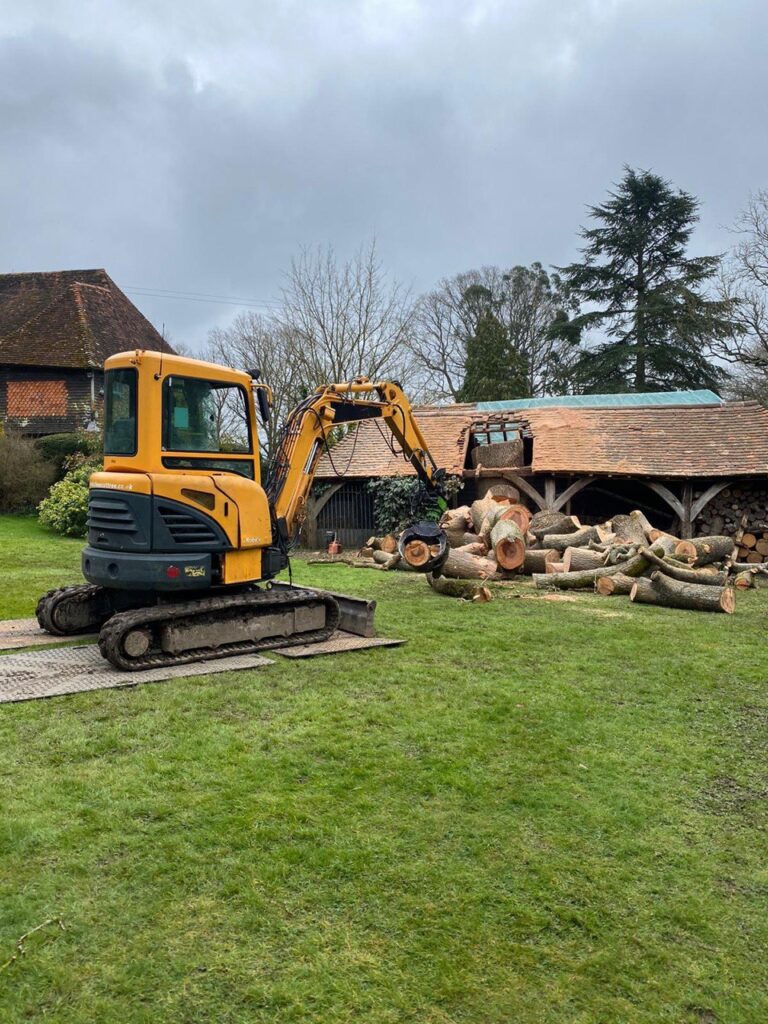
A healthy hedge should provide consistent coverage, a neat appearance and a natural boundary around your garden. However, hedges can develop patchy sections, uneven heights or areas where growth appears noticeably weaker. These problems can affect both the appearance and effectiveness of a hedge, particularly when left untreated for several growing seasons.
Understanding why uneven hedge growth occurs is the first step towards correcting it. For homeowners in Canterbury, Kent, appropriate pruning, suitable growing conditions and regular maintenance can help restore a more balanced, attractive hedge. Canterbury Tree Surgeons can assess hedge condition and provide professional advice on the most suitable approach.
What Causes Uneven Hedge Growth?
Hedges rarely grow at exactly the same rate along their entire length. Differences in sunlight, soil conditions, moisture and pruning practices can all influence how individual sections develop.
Unequal Sunlight Exposure
One of the most common reasons for uneven hedge growth is inconsistent access to sunlight. Sections exposed to direct sunlight may produce dense foliage, while shaded areas can become thinner and less vigorous.
This is particularly noticeable when a hedge grows beside a wall, fence or large tree. The shaded side may develop sparse foliage or become bare near the base because lower branches receive insufficient light.
To improve growth, consider whether surrounding vegetation or other obstacles are restricting sunlight. Where appropriate, carefully managing nearby growth can improve light levels without compromising the health of established trees or plants.
Incorrect or Inconsistent Pruning
Pruning encourages healthy growth when carried out correctly, but cutting a hedge unevenly can leave some sections denser or taller than others. Repeatedly trimming only the top can also prevent sufficient light from reaching the lower branches, contributing to a thin base.
Cutting too deeply into older, bare wood can create further problems for species that do not readily regenerate from old growth. Different hedge plants respond differently to pruning, so the timing and extent of cutting should reflect the species and its condition.
A consistent maintenance routine helps maintain the desired shape while allowing the hedge to develop naturally.
Poor Soil Conditions
Differences in soil quality can cause some parts of a hedge to thrive while others struggle. Compacted ground, poor drainage, nutrient deficiencies and restricted root growth may all contribute to patchy development.
For example, a section growing in waterlogged soil may have weakened roots, while another section in better-drained ground continues to grow strongly. Excessively dry soil can also restrict growth, particularly during warm periods.
Check whether weak sections show signs of waterlogging, dry ground or other changes in soil condition. Improving drainage or soil structure where appropriate may help, but the underlying cause should be identified before making significant changes.
Pests, Diseases and Damaged Branches
Localised damage can leave gaps in an otherwise healthy hedge. Pests, fungal diseases, broken branches and dying shoots may affect only certain sections, making the growth appear irregular.
Look for discoloured leaves, unusual leaf loss, dead twigs or branches that fail to produce new growth during the expected growing season. These symptoms do not always indicate the same problem, so avoid applying treatments without identifying the cause.
If a section continues to deteriorate, professional assessment can help determine whether pruning, targeted treatment or replacement planting is the most appropriate option.
How Can You Correct Uneven Hedge Growth?
The right solution depends on the hedge species, the severity of the problem and whether the weak sections are still capable of producing healthy growth.
Adjust Your Pruning Technique
For hedges that remain healthy but have become irregular, carefully planned trimming can gradually restore a more consistent shape. Avoid removing too much growth in one session, as severe cutting can stress plants and leave permanent gaps in species that respond poorly to hard pruning.
Many hedges benefit from being slightly wider at the base than at the top. This shape allows more light to reach the lower foliage and can help prevent the base from becoming sparse.
Pruning should also be timed according to the species and its growth cycle. Before carrying out significant work, check whether the hedge contains nesting birds, and avoid disturbing active nests.
Improve Growing Conditions
Where uneven growth is linked to soil or moisture problems, correcting the growing conditions can support stronger development. Water newly planted hedges during dry periods, particularly while their roots are becoming established. Established hedges may also need additional water during prolonged dry weather.
Avoid routinely adding fertiliser without understanding the cause of poor growth. Excess nutrients can encourage soft, excessive growth rather than resolving problems caused by drainage, root damage or disease.
Replace Sections That Cannot Recover
Some gaps will not fill naturally, especially when plants have died or older branches cannot produce new shoots. In these cases, replacing individual plants or sections may be more effective than repeatedly trimming the surrounding hedge.
Replacement plants should be suitable for the existing hedge species, available space, soil conditions and light levels. With appropriate planting and aftercare, new growth can gradually blend with the established hedge.
Arrange Professional Hedge Maintenance
If your hedge has become severely overgrown, developed large gaps or shows signs of declining health, professional assistance can help prevent further damage. An experienced tree surgeon can assess its condition, identify likely causes of uneven growth and recommend suitable pruning or renovation work.
Canterbury Tree Surgeons provides hedge maintenance and tree surgery services in Canterbury, Kent, helping homeowners maintain tidy, healthy outdoor spaces. A professional assessment can be especially useful when the hedge requires substantial cutting or when the cause of poor growth is unclear.
How Can You Prevent Uneven Hedge Growth in the Future?
Consistent care is usually more effective than trying to correct years of irregular growth at once. Inspect your hedge regularly, keep pruning appropriate to its species and monitor changes in foliage density.
Pay attention to the base as well as the top, since thinning lower branches can be an early sign of inadequate light or unsuitable pruning. Check for dry or waterlogged soil, damaged shoots and signs of pests or disease before these problems spread.
Maintaining a suitable shape and addressing developing issues early can help your hedge remain dense, healthy and attractive throughout the year.
Conclusion
Uneven hedge growth can result from poor light, inconsistent pruning, unsuitable soil conditions, pests or damaged branches. Identifying the underlying cause makes it easier to choose the right correction, whether that involves adjusting maintenance, improving growing conditions or replacing sections that cannot recover.
If your hedge has become patchy, overgrown or difficult to maintain, contact Canterbury Tree Surgeons to discuss professional hedge care in Canterbury, Kent, and find out how your hedge can be restored to a healthier, more balanced condition.
Call us on: 01227 203994
Click here to find out more about Canterbury Tree Surgeons
Click here to complete our contact form and see how we can help with your trees needs.