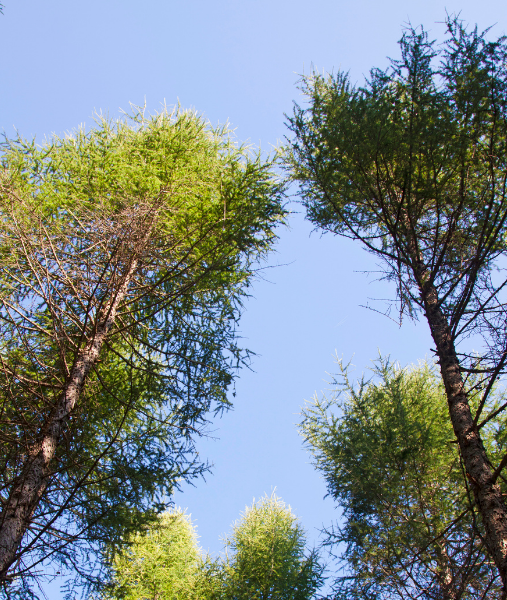
Mature trees can be an important feature of a garden, providing structure, shade and natural character. However, trees continue developing throughout their lives, and a crown that once fitted comfortably within its surroundings can eventually become too large for the available space.
For homeowners in Canterbury, Kent, crown reduction can be an effective form of professional tree management when excessive height or spread begins creating practical concerns. The aim is not simply to make a tree smaller. A properly planned crown reduction carefully reduces selected branches while retaining a balanced, natural-looking canopy and considering the tree’s ongoing health and development.
What Is Tree Crown Reduction?
Crown reduction is a pruning technique used to decrease the overall height, spread or both dimensions of a tree’s canopy.
Rather than cutting branches indiscriminately, selected limbs are shortened back to suitable growth points. The amount removed depends on factors such as the tree species, age, condition, structure and reason for carrying out the work.
A successful crown reduction should leave the tree looking balanced rather than heavily cut back.
1. When the Crown Has Become Too Large for the Garden
One of the clearest reasons to consider crown reduction is when a mature tree begins dominating the space around it.
A large canopy can extend across substantial areas of a garden, reducing usable space and making other features feel crowded.
Professional crown reduction may help bring the tree back into better proportion with its surroundings while allowing it to remain an established feature of the property.
2. When Branches Are Growing Towards the Property
As trees mature, branches can gradually extend towards roofs, walls, windows, gutters and other parts of a property.
Waiting until branches are physically touching these features can make management more complicated.
Where the overall canopy has become excessively large, crown reduction can create greater separation while addressing the shape of the complete tree rather than repeatedly removing individual branches whenever they become inconvenient.
3. When Growth Is Reaching Garden Structures
Trees can also outgrow the space available around:
- Sheds
- Greenhouses
- Fences
- Garages
- Patios
- Paths
- Pergolas and seating areas
Where only one or two branches are causing interference, selective pruning may be sufficient. However, where growth across the wider crown is becoming excessive, a carefully planned reduction may provide a more balanced solution.
4. When a Tree Has Developed an Overextended Canopy
Some trees develop long branches that extend significantly beyond the main crown.
These branches can make the canopy appear poorly proportioned and may become increasingly difficult to accommodate within a residential garden.
A tree surgeon can assess whether selected overextended growth should be shortened as part of a wider crown reduction.
The objective is to create better proportions while maintaining the natural structure of the tree.
5. When the Crown Has Become Unbalanced
Trees do not always grow evenly.
Competition for light, nearby buildings, previous pruning and surrounding vegetation can all influence the direction of growth. Over time, one side of a tree may become considerably more developed than another.
Simply removing large amounts of growth from the heavier side can produce a poor result. Professional crown management considers the whole canopy so that any reduction improves balance without unnecessary pruning.
6. When Excessive Growth Is Affecting Garden Usability
A tree does not need to be touching a structure before its size becomes inconvenient.
Large canopies can extend over lawns, seating areas and paths, changing how comfortably those spaces can be used.
Reducing appropriate sections of the crown may help create:
- Better clearance
- A more open garden
- Improved access
- Greater separation from surrounding features
- A more balanced landscape
The tree can continue providing valuable character without dominating the entire outdoor space.
7. When Dense Growth Is Affecting Natural Light
A substantial tree canopy can influence how much daylight reaches parts of a garden.
Where the overall size and density of a tree have become excessive, professional pruning may improve the relationship between the canopy and the space below.
Crown reduction is not automatically the correct technique whenever more light is desired. Depending on the individual tree, another pruning method may be more appropriate.
This is why assessment should come before deciding on the type of work.
Crown Reduction Is Different From Crown Thinning
Crown reduction and crown thinning are sometimes confused, but they have different purposes.
Crown reduction decreases the overall dimensions of the canopy by shortening selected branches.
Crown thinning generally removes selected branches throughout the canopy without significantly changing its overall height or spread.
If the main problem is that the tree has physically outgrown its available space, reduction may be more appropriate than thinning. If the dimensions are suitable but the canopy requires different management, another technique may be recommended.
Crown Reduction Is Also Different From Crown Lifting
Crown lifting concentrates primarily on the lower part of the tree.
Selected lower branches are removed or shortened to increase clearance beneath the canopy. This can be useful where low growth interferes with paths, lawns or garden features.
If the problem involves the complete height or spread of the tree rather than lower branches alone, crown reduction may provide the more appropriate approach.
Why Randomly Cutting Back Branches Is Not Crown Reduction
Reducing a tree crown requires much more consideration than shortening every branch that appears too long.
Poorly planned cutting can result in:
- An unnatural canopy
- Unbalanced growth
- Excessive removal of foliage
- Poorly positioned pruning cuts
- Dense or undesirable regrowth
- Loss of the tree’s natural character
Professional crown reduction works selectively throughout the canopy.
Each cut should contribute to the overall objective rather than simply making individual branches shorter.
How Much Should a Tree Crown Be Reduced?
There is no single percentage or amount that is suitable for every tree.
The appropriate reduction depends on the individual specimen and its surroundings. Factors that need consideration include:
- Species
- Age
- Existing condition
- Branch structure
- Previous pruning
- Overall crown size
- Available growing space
- Reason for the proposed work
In some situations, a relatively modest reduction can make a significant difference. Excessive pruning should not be treated as automatically better simply because it creates a smaller tree.
Why the Natural Shape of the Tree Matters
One of the signs of skilled crown reduction is that the finished tree should still look like a tree of its natural form.
A heavily cut or abruptly shortened canopy can appear artificial and poorly balanced.
Experienced tree surgeons identify suitable pruning points throughout the crown so that the reduction is distributed appropriately.
This requires an understanding of branch structure and how the tree is likely to respond after pruning.
Can Crown Reduction Help Avoid Unnecessary Tree Removal?
In suitable circumstances, yes.
A healthy tree may become inconvenient simply because its canopy has outgrown the available space. Removing the entire tree may be unnecessary if professional management can resolve the issue.
Crown reduction can sometimes allow mature trees to remain within residential gardens while creating better clearance around surrounding features.
Retaining an established tree where appropriate can preserve shade, screening and the character it brings to the garden.
Why Earlier Management Can Be Beneficial
It is often easier to manage developing growth before a tree becomes significantly oversized for its position.
Allowing branches to extend increasingly far before considering pruning can mean that more substantial work is eventually required.
Periodic professional assessment can identify where selected growth needs managing and whether gradual crown control would be beneficial.
This creates a more planned approach to tree maintenance.
Not Every Large Tree Needs Crown Reduction
Size alone does not mean that a tree requires pruning.
A mature tree with sufficient surrounding space may be perfectly suitable at its existing dimensions. Unnecessary reduction can remove healthy growth without providing a meaningful benefit.
The important question is whether the tree’s crown has become unsuitable for its location or whether specific growth is creating a genuine practical concern.
Professional assessment helps distinguish between a naturally large tree and one that would benefit from careful management.
Why Skilled Tree Surgery Matters
Crown reduction directly changes the structure and appearance of a living tree. The quality of the work can therefore influence how successfully the tree develops afterwards.
Professional tree surgeons consider the complete canopy before beginning work, selecting appropriate branches and pruning points rather than working purely from the outside in.
This approach helps achieve a controlled reduction while maintaining an appropriate shape.
Why Choose Canterbury Tree Surgeons?
Canterbury Tree Surgeons provides professional tree surgery services throughout Canterbury, Kent. We assess each tree individually, considering its size, condition, structure and relationship with the surrounding garden before recommending appropriate work.
Where crown reduction is suitable, our focus is on carefully managing excessive growth while retaining a balanced and natural-looking canopy. If another pruning technique would provide a more appropriate result, the work can be planned accordingly.
The aim is always to provide tree surgery based on what the individual tree and surrounding space genuinely require.
Conclusion
Crown reduction is worth considering when a tree has become too large for its position, branches are extending towards property features, the canopy has become unbalanced or excessive growth is beginning to restrict the use of the surrounding garden.
However, making a tree smaller should never be the only objective. Successful crown reduction requires careful decisions about which branches to shorten, how much growth to remove and how to retain the natural proportions of the canopy.
For homeowners in Canterbury, Kent, concerned that a tree is becoming too large for its surroundings, Canterbury Tree Surgeons can assess the tree and recommend appropriate professional pruning to achieve a more manageable, balanced and well-maintained crown.
Call us on: 01227 203994
Click here to find out more about Canterbury Tree Surgeons
Click here to complete our contact form and see how we can help with your trees needs.