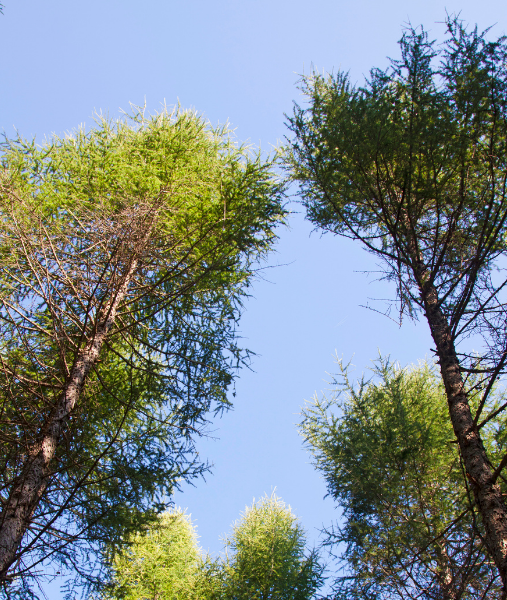
When managing the size and shape of a tree, two of the most commonly recommended techniques are crown thinning and crown reduction. Although these terms are often used interchangeably by homeowners, they serve different purposes and achieve different results.
For property owners in Canterbury, Kent, understanding the distinction helps ensure the right solution is chosen for both safety and long-term tree health. At Canterbury Tree Surgeons, we assess each tree individually and recommend the most appropriate method based on its condition, location and surrounding environment.
What Is Crown Thinning?
Crown thinning involves the selective removal of smaller branches throughout the canopy. The overall height and spread of the tree remain largely unchanged, but the internal density of the crown is reduced.
The primary objectives of crown thinning are:
- Allowing more natural light to pass through the canopy
- Reducing wind resistance
- Improving air circulation
- Minimising stress on specific limbs
- Removing dead, crossing or weak growth
This technique maintains the tree’s natural shape while making it less dense. It is particularly beneficial where a tree is blocking light into a garden or property but does not necessarily need to be made smaller.
In Canterbury, Kent, crown thinning is often suitable for mature trees that are structurally sound but have become overly dense.
What Is Crown Reduction?
Crown reduction, by contrast, involves decreasing the overall size of the tree. Both the height and spread are carefully reduced by cutting back to appropriate growth points.
The objectives of crown reduction typically include:
- Controlling the size of a tree that has outgrown its space
- Reducing weight on heavy limbs
- Preventing encroachment over buildings or boundaries
- Managing structural imbalance
This technique changes the tree’s dimensions while preserving its natural form. Crown reduction is commonly recommended when a tree is growing too close to a property or when its height presents safety concerns.
Key Differences Between the Two
The main difference lies in intention and outcome.
Crown thinning focuses on density without altering overall size. The tree remains roughly the same height and spread, but the canopy becomes lighter and more open.
Crown reduction focuses on scale. The tree becomes smaller in both height and width, though it should still retain a balanced and natural appearance when performed correctly.
Choosing the wrong technique can lead to poor regrowth or structural issues. Professional assessment ensures that the selected method benefits the tree rather than weakening it.
When Is Each Method Appropriate?
Crown thinning may be appropriate if:
- You want more light in your garden
- The tree feels heavy in strong winds
- The canopy appears overcrowded
Crown reduction may be more suitable if:
- The tree is encroaching on your roof or neighbouring boundaries
- Branches are extending too far over driveways or pathways
- The tree has become disproportionate for its setting
In Canterbury, Kent, many properties feature mature trees close to buildings, making correct technique selection especially important.
Why Professional Expertise Matters
Both crown thinning and crown reduction require careful pruning to avoid unnecessary stress. Poor cutting points or excessive removal can leave a tree vulnerable to disease or weak regrowth.
At Canterbury Tree Surgeons, we follow recognised arboricultural practices to ensure every cut supports healthy, stable development. Our approach balances safety, aesthetics and long-term tree vitality.
Conclusion
Crown thinning and crown reduction are distinct tree surgery techniques designed to address different needs. Thinning improves light and airflow by reducing canopy density, while reduction decreases the overall size of the tree to manage space and structural concerns.
If you are unsure which option is appropriate for your tree in Canterbury, Kent, Canterbury Tree Surgeons can provide a professional assessment and clear guidance. Choosing the correct approach ensures your tree remains safe, well-balanced and a positive feature of your garden for years to come.
Call us on: 01227 203994
Click here to find out more about Canterbury Tree Surgeons
Click here to complete our contact form and see how we can help with your trees needs.